
Mont.BCN
Carrer d'En Bot, 5
Opening
June 30th, 2026
7 PM

Liens invisibles
Louve Delfieu
France
This exhibition explores the visceral and fundamental connection between human beings and nature, using photography to reveal our interdependence with the living world. Through images of roots, branches, and lightning, the work draws connections between these arboreal forms and human structures such as arteries, bronchi, and capillaries, tracing a parallel between the networks that sustain life in trees and those that run through our bodies. By making these patterns of circulation and flow visible, the work emphasizes the closeness between the natural and the human, confronting us with the fragility and fleetingness of our existence. In dialogue with the broad cycles of the natural world, the work reminds us that human life is only a temporal fragment within an ancestral and continuous ecosystem.

Sueños del Tiempo
Laura Brinkmann
Spain
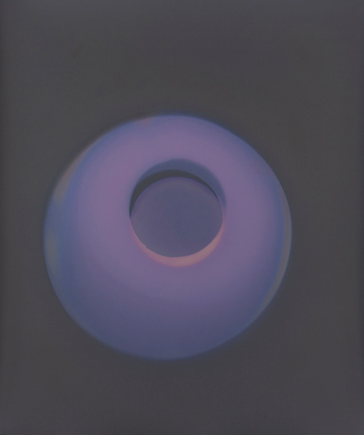
I experimentally investigate the passage of time using my grandfather’s old watchmaking pieces, which I place on traditional black-and-white photographic paper. Each frame reflects the passing of minutes, hours, or days, leaving behind the traces of these objects as if they were small worlds made of matter and dreams. The installation Astrolabe is inspired by the astronomical instrument used to measure time and determine the position and height of the stars in the sky during the Andalusian period. The narrative thread connecting these pieces leads us to the relationship between human beings, the rhythm of the cosmos, and matter through the alchemical and slow process of cameraless photography.

God in a Beer Can: 0.5L Arctic Edition. Images, installation and a film loop.
Thomas Lafuente
Norway | France | Poland
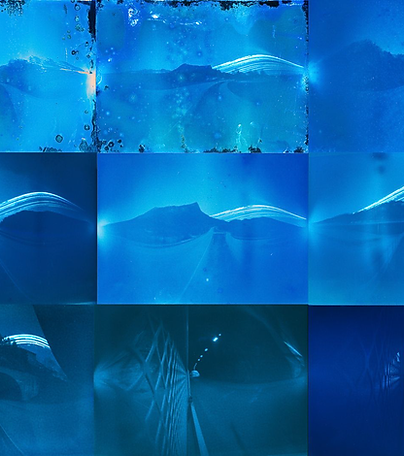
Over the last two years, this project has focused on extremely long-exposure analog photography using handmade pinhole cameras, capable of recording the invisible movement of time. The series Painting Time - Solargraphy from Lofoten was created above the Arctic Circle, in northern Norway, where the sun disappears in winter and never sets in summer. There, light, weather, water, and humidity transform the images into abstract, almost cosmic landscapes. The project also includes Solargraphy Hyperlapse, developed with the Norwegian Public Roads Administration, with 180 cameras installed for three months along a 6 km stretch of road. These works are part of a long-term research project on time, geography, and light, open to collaboration, curatorial dialogue, and new presentation formats.
Lab Nau Especial
Carrer del Correu Vell, 8
Opening
July 1st, 2026
7 PM
The Time Between
Lluís Estopiñan
Spain
This exhibition proposes a reflection on unphotographed time: the time that passes between two images without being fixed in either of them. The project shifts attention toward the margins of the analog negative, those intermediate spaces normally considered residual, in order to reveal their unexpected poetic potential. There, undocumented life is concentrated, everything that was not chosen for posterity. The works materialize this inquiry in different ways: some reframe the narrow strip between frames and turn it into the main image; others condense an entire roll of film into a single composition, evoking sequences, rhythms, or hidden codes; and others gather only the empty spaces, offering a radical representation of time passing without being photographed. In every case, the work activates a language that does not represent, but remembers, making absence visible.

Galería Borsí
Carrer de la Ciutat, 3
Opening
July 2nd, 2026
7 PM
Flying Roots
Maria Solaguren Beascoa
Spain
This exhibition presents an ongoing photographic and ecological project that explores how to reconnect with nature through experimental and sustainable photographic techniques. Through trichromatic cyanotype, a 19th-century process based on sunlight and plant-based pigments, the images are slowly constructed as a collaboration between chemistry, organic matter, and environment. Initially inspired by the bearded vulture of the Pyrenees and its relationship with natural oxides, the work expands into an investigation of how different birds use pigments, minerals, and light as forms of communication, identity, and survival. By bringing together science, conservation, and experimental photography, the works propose another way of looking at wildlife and ecosystems: not as a distant spectacle, but as an experience of attention, slowness, and connection. The images also continue to transform over time, like the very cycles of nature.

Centre Cívic
Pati Llimona
Carrer Regomir, 3
Opening
July 3rd, 2026
7 PM
Ancestras, maestras
Rocio Bueno Royo
Spain
Ancestras es un proyecto de investigación y creación que recupera y visibiliza a mujeres creadoras del siglo XX relegadas por la historia. A partir de más de 130 retratos rescatados de archivos y colecciones, la obra construye una genealogía femenina que cuestiona la ausencia de referentes y propone una reparación simbólica desde una mirada feminista. Las fotografías son intervenidas manualmente con hojas, flores y ramas, que funcionan como metáfora del tiempo, la memoria y el legado. Así, el archivo se transforma en cuerpo, materia y presencia, reuniendo en cada imagen lo histórico y lo poético. La exposición, concebida como una constelación modulable, incorpora luz, sonido y una disposición variable de las piezas para generar una experiencia inmersiva. El proyecto se expande además en una publicación en formato de juego de cartas, que activa la memoria colectiva desde la participación.

Mirrored Territories
Juan Carlos Rodríguez Ogarrio
Mexico
Territories escape our ability to possess them, contain them, or carry them with us. Only through their representation can we share the experience of seeing them. They are illusions of the ungraspable, framed to symbolize our desires. In them we project freedom, spirituality, the impulse to travel, and, in recent times, our debt to the planet. Through images of territory, we come to know what is distant, even that which we may never experience with our own eyes. These images replace direct experience and evoke a spiritual dimension. They inspire both calm and longing. We use them to promote travel, denounce environmental degradation, or express the identity and origin of what we consume. Ultimately, they are reflections of what we cannot fully possess.

Digigrams
Tommy Goguely
France
Technical media are, most of the time, transparent, and only reveal their true nature through failures or when disturbances occur. Based on this principle, this series seeks to foreground the intrinsic materiality of digital photography. To do so, digital camera sensors were deliberately damaged through direct physical actions such as scratches, punctures, and other interventions on the photosensitive electronic surface. As the sensor records the traces of its progressive destruction, the photographs produced by the camera become self-referential, capturing only the process of their own creation. The digital photosensitive surface, usually just a receptacle for images, thus becomes photographic matter in itself, whose alterations reveal its substance.

THIN NOT BEAUTIFUL
Irina Cheremisina
Ukraine
This exhibition confronts the paradoxical and often cruel standards imposed on women’s bodies, especially those perceived as “too thin.” Through a series of images, the work draws on real phrases received over the years, unsolicited comments that turn the body into an object of judgment, suspicion, and correction. It is not only about thinness, but about the experience of being watched, misunderstood, and shamed for existing in a body that others believe they have the right to comment on. By bringing these words from memory into the visual plane, the work sheds light on a form of body shaming that is rarely acknowledged. The exhibition thus invites viewers to question toxic narratives around beauty and to reclaim the voice, identity, and singular truth of every body.

Huellas
Yinna Higuera
Ecuador - Colombia
This exhibition explores the ancestral bond between rural Ecuadorian women and the land they inhabit, cultivate, and protect. Through portraits printed with plant-based photosensitivity on banana, cacao, coffee, herb, and vegetable leaves taken from their own gardens, the work brings together photography and organic matter in a gesture of resistance, reverence, and memory. Each support, with its texture, color, and shape, transforms the image into a unique, ephemeral, and living object, where the skin of the leaf and that of the face enter into dialogue. The process, slow, handmade, and sensitive to time and environment, questions mechanical reproduction and restores to photography a ritual and intimate dimension. The exhibition honors women’s knowledge, invisible labor, and the relationship with natural cycles, inviting us to think of the image as a form of ecological, affective, and political listening.

Memory Simulacra
Nic Ma
Hong Kong
Memory Simulacra examines the intersection of memory, technology, and hyperreality in the digital era. Through the use of 3D scanning with an iPhone, it rethinks the way we capture and remember experiences in a world increasingly mediated by devices, unlike traditional photography, which is tied to time, framing, and a linear narrative. Through fragmented and abstracted simulations, the work reflects the emotional and discontinuous nature of memory, questioning how technology shapes reality, perception, and experience within a hyperreal landscape.

The Room of the Museum of Forgetting
Dasha Podoltseva & Alexey Shmurak
Ukraine
Audiovisual installation
Memory, remembrance, reminders: important concepts for both social communication and personal experience. In their work, Alexey and Dasha focus on the opposite concept: forgetting.
The overall generic framework of the installation is that of a museum or thematic archive. The artists create a room in the non-existent Museum of Forgetting, dedicated to the forgetting of dreams.

Light abstractions
Maarten Rots
Netherlands
The series 'Light Abstractions' grew from Rots' hands-on experiments with old slide projectors and pieces of stained glass—materials chosen for their ability to fragment and refract light in unexpected ways. By projecting coloured light from multiple directions, he created temporary, three-dimensional spaces within his studio. These weren't carefully planned setups but rather environments for discovery, where patient observation and subtle adjustments yielded surprising compositions. The work is fundamentally about process and play: moving the projectors incrementally, repositioning the glass, walking his camera through the shifting light to find moments that felt visually alive. As Rots moved through the projected light with his camera, he wasn't simply documenting a fixed scene but actively reshaping how we perceive it, putting an emphasis on perspective as something fluid and changeable. By deliberately shifting his position and moving through the light, he captured vibrant, graphic imagery that exists only in these photographs—compositions that document not just light and colour, but the artist's own journey of discovery within it.

Boys of Swiftcurrent Lake
Barbara Justice
United States
This immersive exhibition brings together between 8 and 12 handmade photographic books, created using cyanotype and other alternative processes such as Van Dyke and photographic screen printing. Each piece explores the relationship between photography, object, and sculptural form through different binding techniques, such as accordion, Coptic, and star structures. The exhibition combines the language of the artist’s book with photographic experimentation, focusing on the diversity of formats, materials, and display methods. The books shown function as examples of a broader edition currently in development, and anticipate an installation in which each work proposes a singular way of looking at, moving through, and inhabiting the image. The exhibition thus invites the public to enter a universe where photography unfolds beyond the wall and finds in the book an expanded space for creativity and experience.

Family Glitch
Kümei Kirschmann
Argentina
This exhibition brings together works that explore the limits of analog and experimental photography through old family photographs that have been scanned and deliberately distorted. What begins as an act of preservation becomes a process of transformation, in which the scanner ceases to be a tool of reproduction and instead acts as a device of alteration. Through glitches, movements, and digital accidents, the images lose their recognizable form and become hybrid figures between body and data, memory and glitch. The works exist between the intimate and the uncanny, revealing the fragility of the family archive as a living, mutable, and vulnerable organism. Rather than reconstructing a truth of the past, the exhibition focuses on what persists after distortion: its emotional residue. Experimentation and error thus open up a reflection on the image, imperfection, and its poetic potential.

A Matter of Perspective
Erik Johansson
Sweden
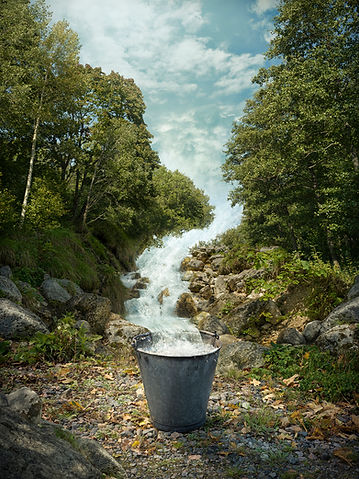
In the narrow, centuries-old stone corridors of Barcelona’s Gothic Quarter, the boundaries of reality begin to soften. This exhibition presents a series of large-scale "architectural portals" designed to punctuate the heavy, vertical walls of St. Simplici Street. Erik Johansson utilizes his signature blend of meticulous perspective and surreal construction to transform these physical surfaces into windows. Where the viewer expects solid stone, they instead find a portal into another world. By placing these domestic and architectural displacements within the rigid, historical context of the Pati Llimona, Johansson invites the passerby to look past the physical limitations of the city. The exhibition acts as a structural "leak" in the urban fabric, suggesting that even the most solid foundations are merely a matter of perspective.
Collective of Processes
International Residency of Experimentatio EXP-IEFC-UB
During this year’s residency, each resident will have one day to develop a theoretical-practical workshop in which they will share an experimental technique with the rest of the group. The proposal maintains its focus as a horizontal community of collaborative learning, where the exchange of knowledge, collective experimentation, and peer-to-peer transmission occupy a central place, above the individual development of personal projects. Throughout the residency, different experimental techniques will be explored through a logic of coexistence, testing, and shared learning. The residency will conclude with a collective exhibition focused on making visible the research and learning processes activated during those days, rather than on presenting finished results, and it will be shown on the ground floor of the Institut d’Estudis Fotogràfics de Catalunya, within the framework of the Experimental Photo Festival in Barcelona.
Coordinator: Célica Veliz
Artists: Cara Coombe (Australia), Christopher Palm (Ecuador), Dietlinde DuPlessis (United States), Estefanía Montenegro (Ecuador), John Steck Jr. (United States), Maike Brautmeier (Germany), Ryder Booth (United States), and Ute Friederike Schernau (Germany).

Experimental
HUB
Carrer de Llull, 105
Opening
July 5th, 2026
2.30 PM
Windows to the Real
Experimental Documentary Photography
Curators: Arantxa Berganzo y Astrid Jacomme
This group exhibition, curated by Arantxa Berganzo and Astrid Jacomme, brings together artists of diverse nationalities such as Tania Bakum, Katia Motylova-Babinska, Marcus De Sieno and Eli Pimentel in a proposal that explores the possibilities of experimental documentary photography. Through different visual languages and photographic processes, the works transcend the conventional codes of documentary, expanding the notion of document toward more poetic and critical ways of observing the world. With images marked by conflict, memory, displacement and resistance, from Ukraine to the Mexico-United States border, the exhibition proposes new ways of witnessing the contemporary experience. Like an open window onto reality.
